
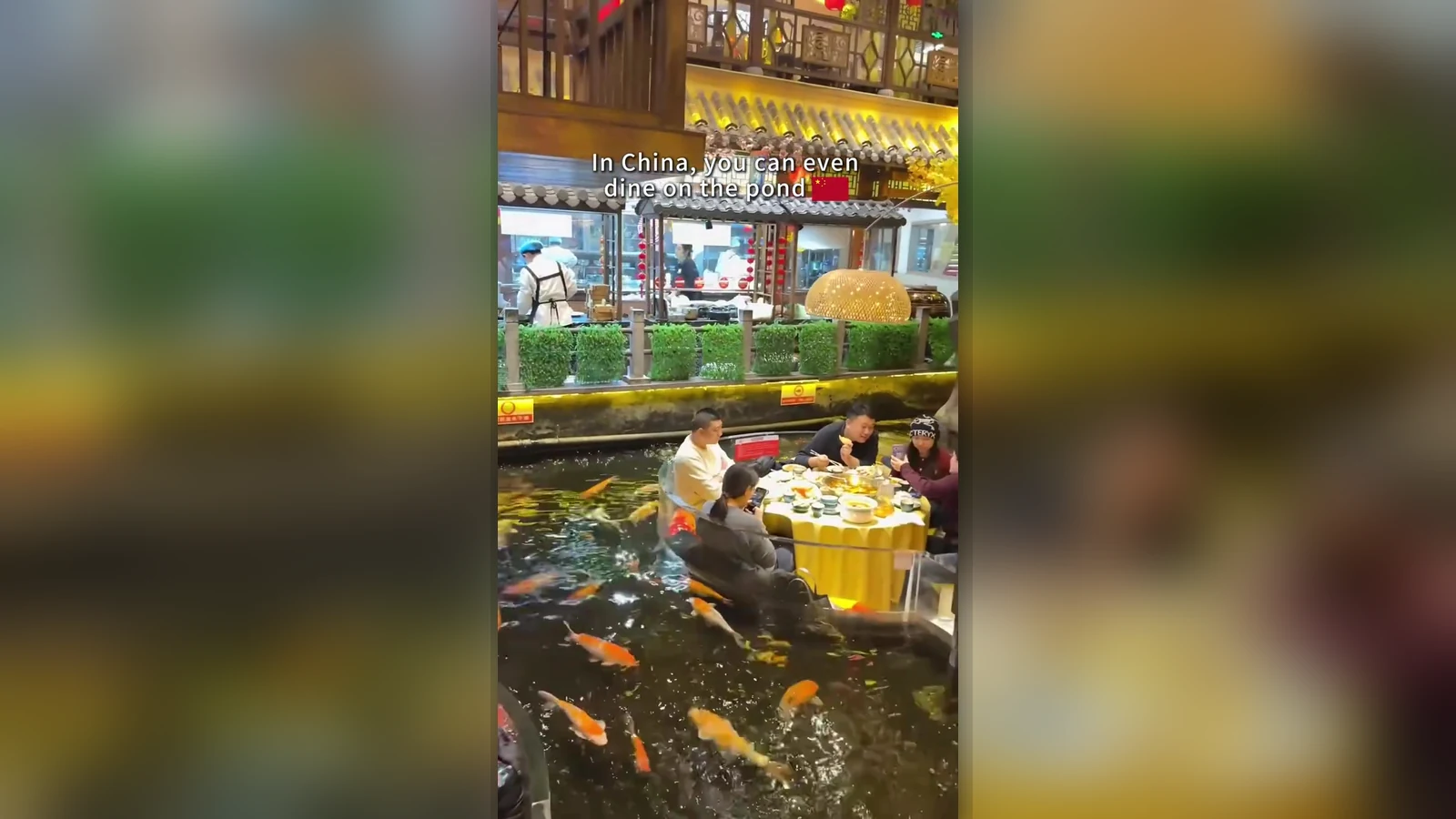
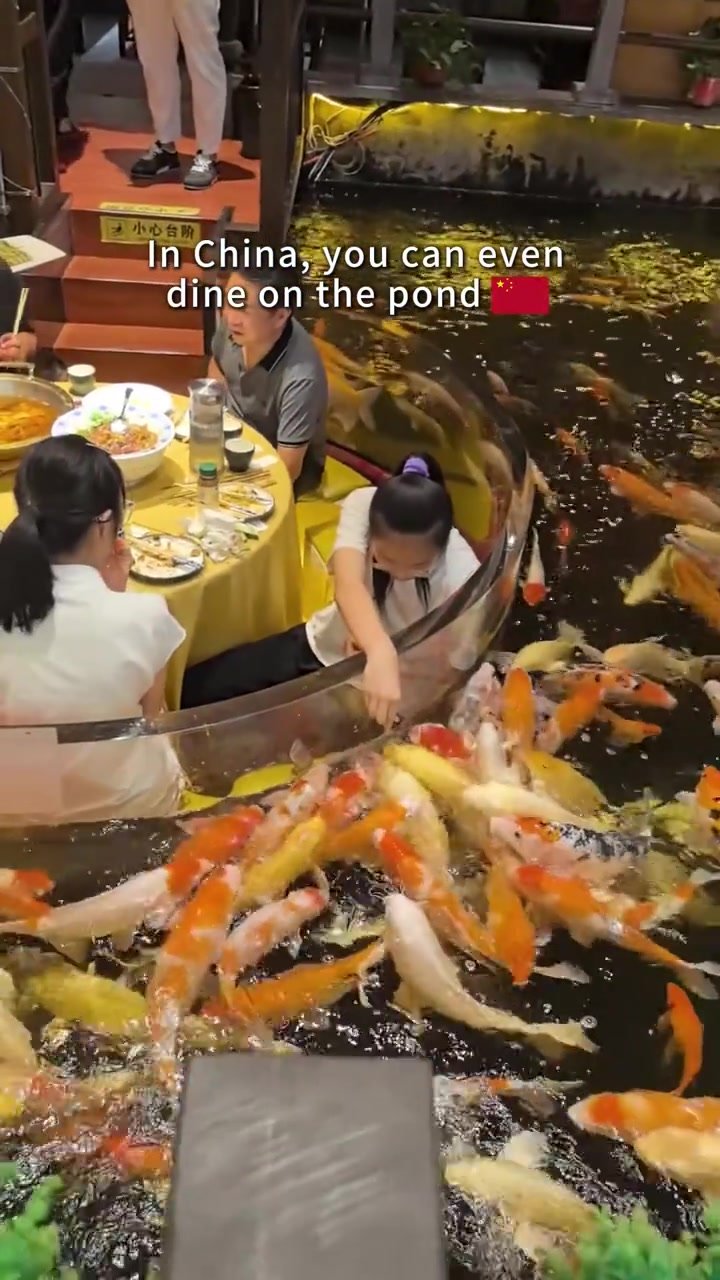
Imagine arriving for dinner and discovering that your table is not beside the water but apparently in it. Orange, white and gold koi glide past your chair; lanterns glow overhead; another party eats from a circular booth that resembles a little boat. It is theatrical, slightly surreal and exactly the sort of experience that makes travellers ask the same urgent question: where is this place?
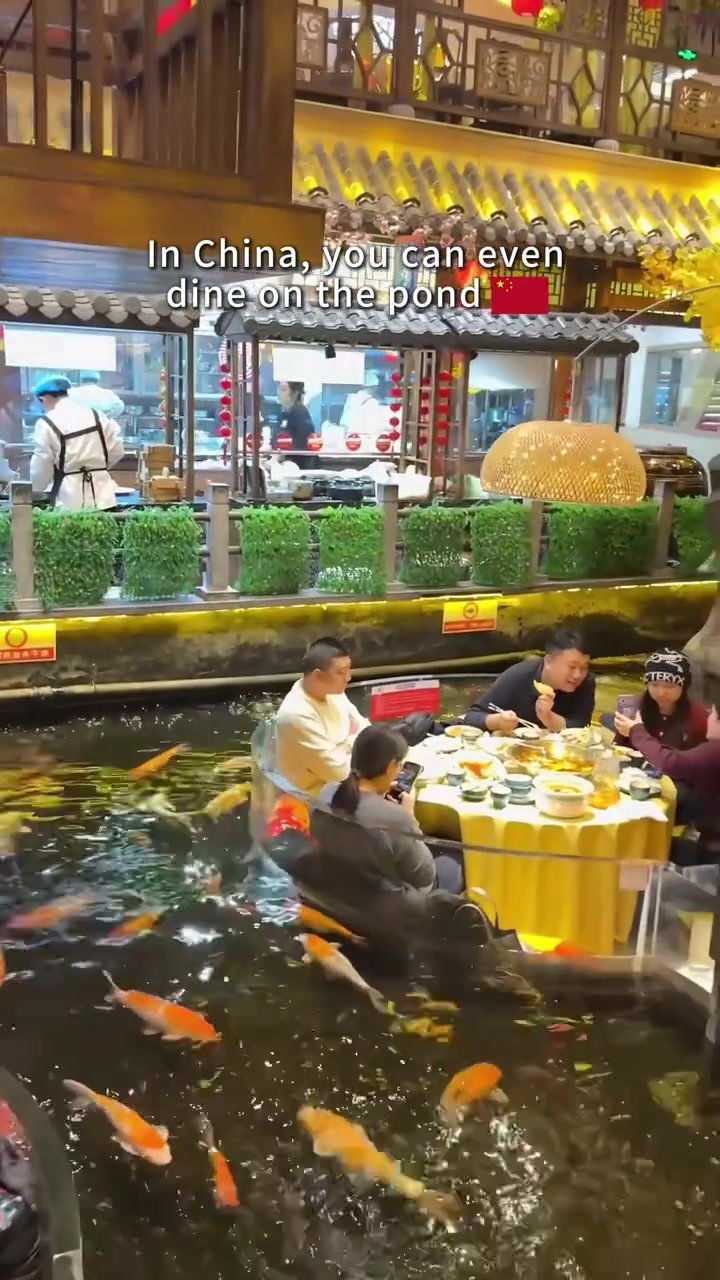
A short video by Eunice’s Guangzhou Tour presents the scene as pond dining in Guangzhou, China. The footage clearly shows round dining booths surrounded by water, numerous large koi, Chinese-inspired architecture and people eating full meals. It does not, however, provide a restaurant name or a verifiable street address. That distinction matters: the experience is real on camera, but its precise location and current availability should not be guessed from images alone.
The irresistible idea: dinner becomes an attraction
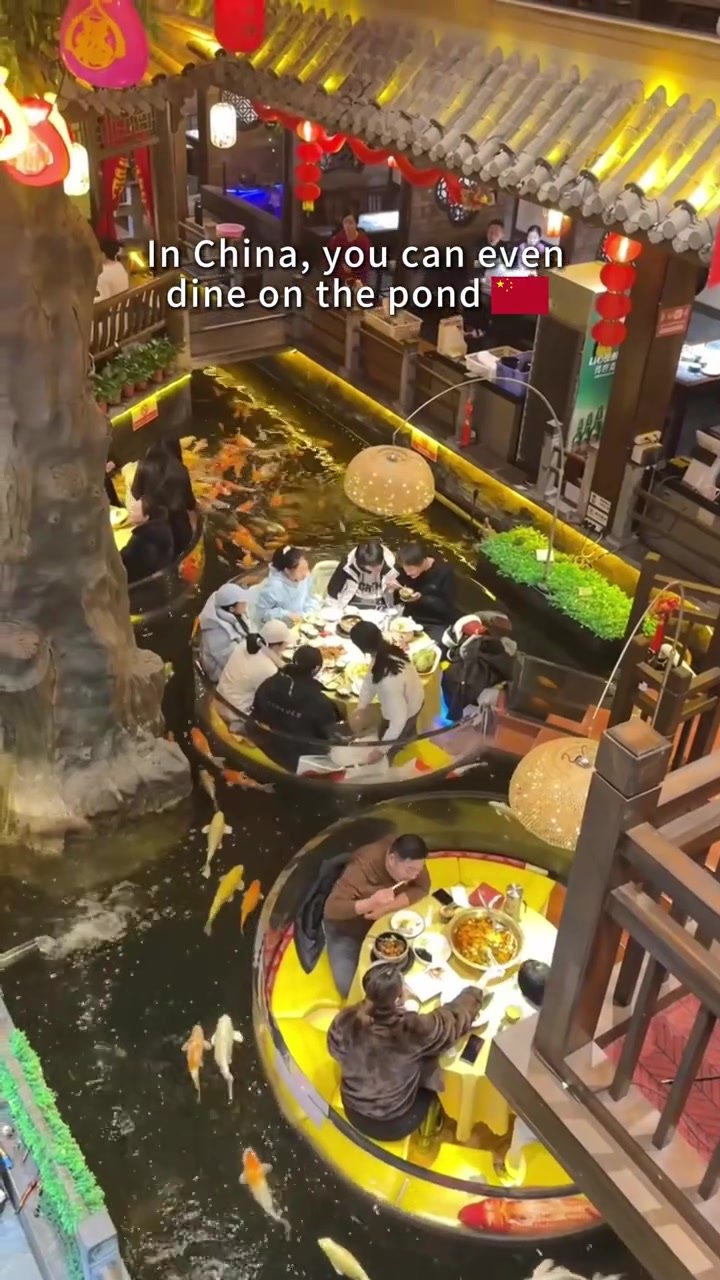
Most restaurant ponds are decorative features viewed from a safe distance. Here, the water appears to form the dining room itself. Guests sit within transparent-sided circular booths while fish gather only centimetres away. Some tables look like stationary boats floating in a miniature canal, making the journey from entrance to seat part of the spectacle.
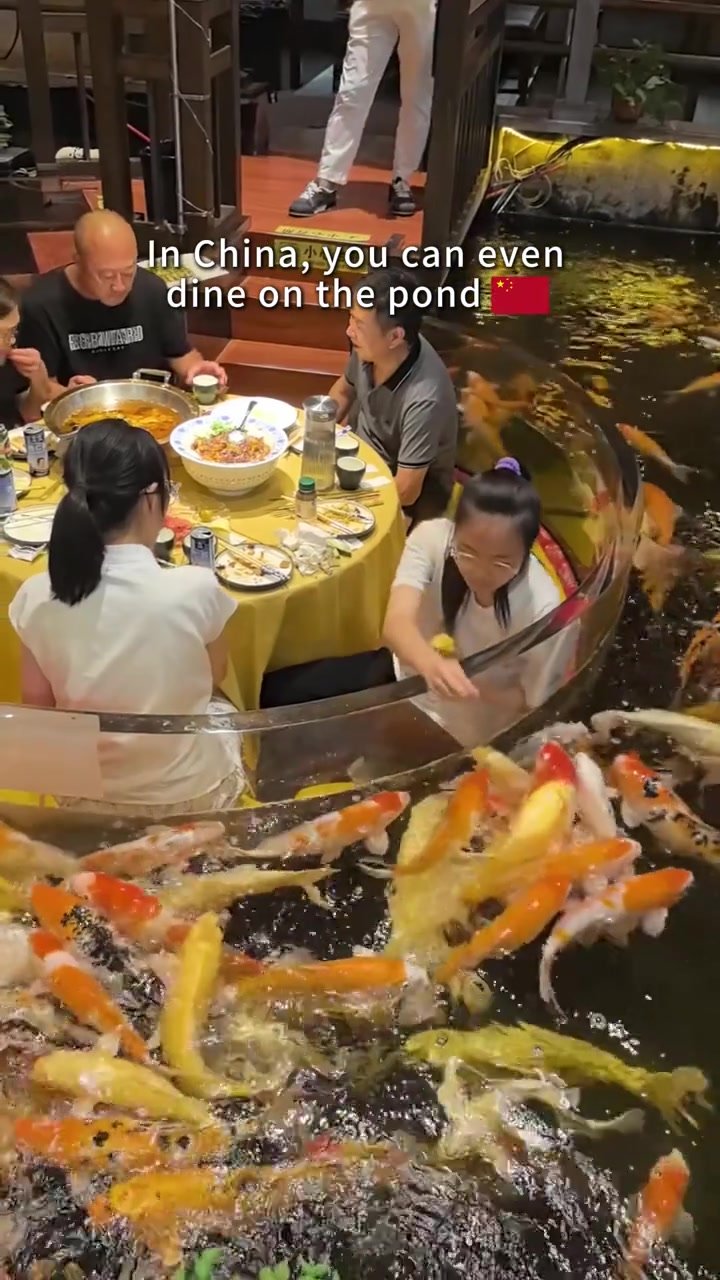
That unusual closeness explains the fascination. Comments repeatedly express a desire to visit, while many others ask for the location, price and method of entering the seating area. There are jokes about taking a fish home or washing one’s hands in the pond, but the underlying appeal is sincere: people want a meal that feels like stepping into a fantasy environment.
The best way to approach it is as immersive restaurant design rather than an aquarium petting experience. Koi are living animals, not table entertainment to touch, catch or feed without permission. Food dropped into their water can also be harmful. Enjoy the view, follow staff instructions and keep human food on the table.
What the video shows—and what it cannot promise
The selected frames show at least two types of circular seating, abundant koi and a richly decorated indoor setting with tiled rooflines, lanterns, woodwork and a large artificial tree. Diners appear to be sharing dishes family-style. One close view captures a dramatic cluster of fish at the edge of a booth, while wider views reveal the restaurant’s canal-like layout.
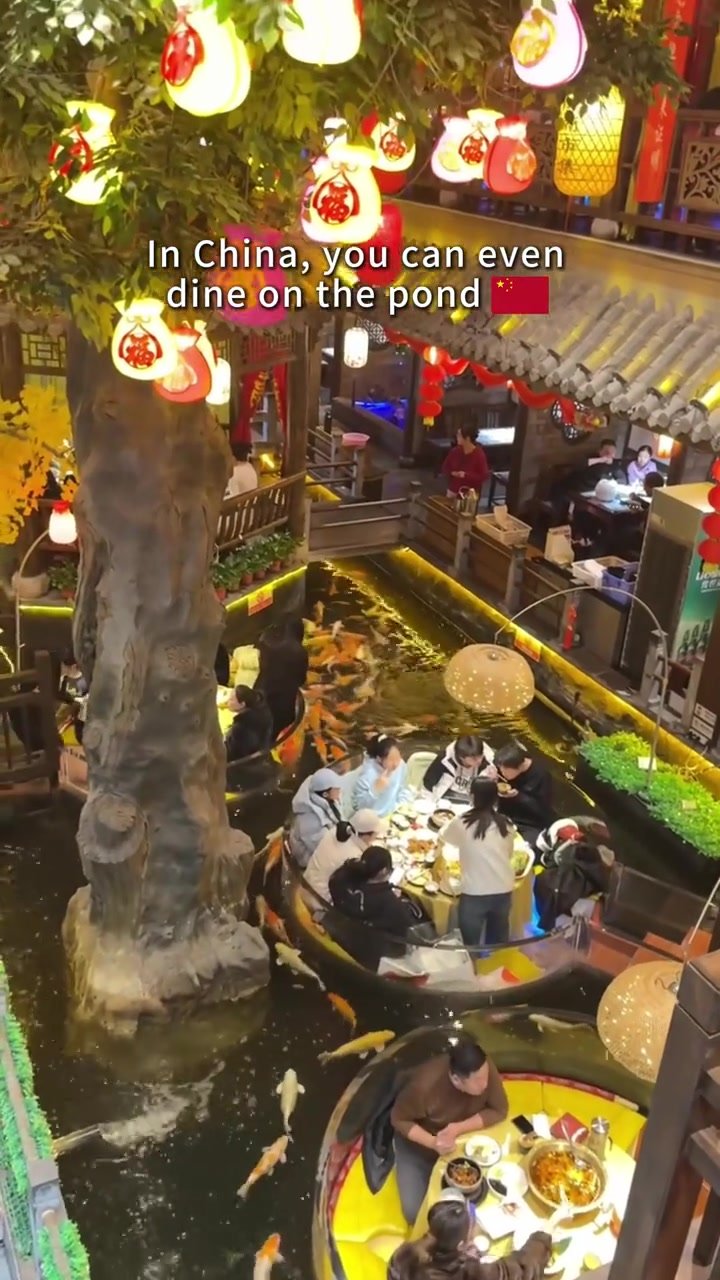
The footage does not establish the restaurant’s menu, hygiene procedures, accessibility arrangements, reservation system or whether every guest can request a pond table. It also does not prove that visitors may feed the fish. Restaurant concepts, business names and booking policies can change quickly, so none of those details should be treated as guaranteed.
Even the creator’s Guangzhou label should be handled carefully. It is useful first-hand context, but the restaurant’s name and address remain independently unconfirmed in the supplied material. A responsible trip plan therefore begins with verification rather than a taxi ride based on a screenshot.
How to find and verify the venue
Start by saving the original TikTok link and several clear frames. Ask the creator for the restaurant’s current Chinese name, district and map pin; a Chinese-character name is far more useful locally than an approximate English translation. If a name is supplied, compare it across a recent business listing, the restaurant’s verified social account and a map result before making plans.
China’s local restaurant platforms are especially helpful for checking recent photographs and notices. An official Guangzhou guide for international residents recommends Dianping, Meituan and Ele.me for finding restaurants. Search with image-led terms such as “Guangzhou koi restaurant” or the Chinese phrase 广州锦鲤餐厅, then compare interior details rather than trusting a similar-sounding name.
Before travelling, contact the venue directly and ask four concise questions: Is the restaurant still operating at this address? Are the seats surrounded by the koi pond currently available? Is a reservation required? Can the venue accommodate your mobility, dietary or allergy needs? Request the destination pin in the map app you will actually use.
This verification step is not meant to drain the fun from the adventure. It prevents an unusual restaurant from becoming an expensive cross-city scavenger hunt—and leaves room for a worthwhile alternative if the original venue cannot be confirmed.
Make the restaurant part of a Guangzhou food trip
Guangzhou is a strong destination even without one photogenic table. The municipal international portal describes Cantonese cuisine as one of China’s major culinary traditions, noted for diverse ingredients, careful preparation, freshness, texture and aroma. Tea, soup, dim sum and late-night snacks all have prominent places in the local food culture.
Build a day around that rhythm. Begin with yum cha, the leisurely combination of tea and shared dim sum. Familiar entry points include shrimp dumplings, siu mai, char siu buns and egg tarts. At another meal, try wonton noodles or beef chow fun; later, consider roast meats, congee or a Cantonese sweet soup. These are not consolation prizes if the koi venue proves elusive. They are the heart of eating in Guangzhou.
A themed restaurant can provide the evening’s visual flourish, while traditional tea houses and neighbourhood shops give the trip depth. The contrast is part of the pleasure: one meal turns dinner into scenery; another lets technique, texture and conversation command all the attention.
Practical planning
- Confirm before crossing the city: Obtain the current Chinese name, address and reservation details directly from the venue or creator. Do not rely solely on a reposted video.
- Ask specifically for the experience shown: A restaurant may have ordinary rooms as well as pond-side booths. Confirm the seating category rather than assuming every booking includes koi.
- Prepare digital payment, but carry a backup: Chinese government guidance says overseas visitors can register for Alipay, WeChat Pay or UnionPay and may bind supported international cards. Cash remains a valid payment method, although acceptance of a particular foreign card can vary by merchant.
- Save addresses in Chinese: Show the written venue name and map pin to a taxi or ride-hailing driver. A translated nickname may not identify the correct business.
- Check entry rules for your own passport: China’s National Immigration Administration currently lists a 240-hour visa-free transit arrangement for eligible nationalities travelling onward to a third country or region, subject to designated ports, permitted areas and other conditions. This is not a universal tourist-visa exemption, so verify the latest rules for your itinerary.
- Respect the pond: Do not touch, catch or feed the koi unless staff explicitly provide an approved activity. Supervise children closely around water and follow the venue’s access rules.
Is it worth building a trip around?
Build an evening around it, certainly—once the venue is verified. Building an entire international journey around one unidentified restaurant would be riskier. The smarter promise is Guangzhou itself: a city where a playful koi-filled dining room can sit within a far larger culture of morning tea, skilled wok cooking, slow soups and convivial shared meals.
If the exact table is available, enjoy the improbable sight of dinner surrounded by flashes of living colour. If it is not, let the search lead you into Guangzhou’s broader food landscape. Either way, arrive curious, hungry and ready to share.
Accuracy note: The TikTok footage shows the dining environment described above and identifies the setting as Guangzhou, but the supplied source does not name the restaurant. Availability, seating, access and restaurant operations must be confirmed directly. This article is a WordPress draft and should not be published without a final fact-check.
Sources and Traveler Note
- Original TikTok video by Eunice’s Guangzhou Tour
- Flavors of Guangzhou: A Cantonese Culinary Adventure — Guangzhou International
- An Expat’s Guide to Living and Working in Guangzhou — Guangzhou Municipal Government
- Guide to Working and Living in China — Chinese Government
- 240-Hour Visa-Free Transit Policy — National Immigration Administration
Details such as staffing, events, weather, admission rules, opening hours and transport can change. Verify current information with the destination before booking.