

Imagine settling beside a train window, looking up at a display showing more than 400 km/h, and then watching another silver train streak past outside. For travellers accustomed to cancellations, slow regional services or journeys measured in most of a day, the scene feels less like public transport and more like a glimpse of the future. That contrast is the irresistible premise for a China trip built around high-speed rail: what if the travel day became one of the experiences you came for?

The 400 km/h moment—and the important reality check
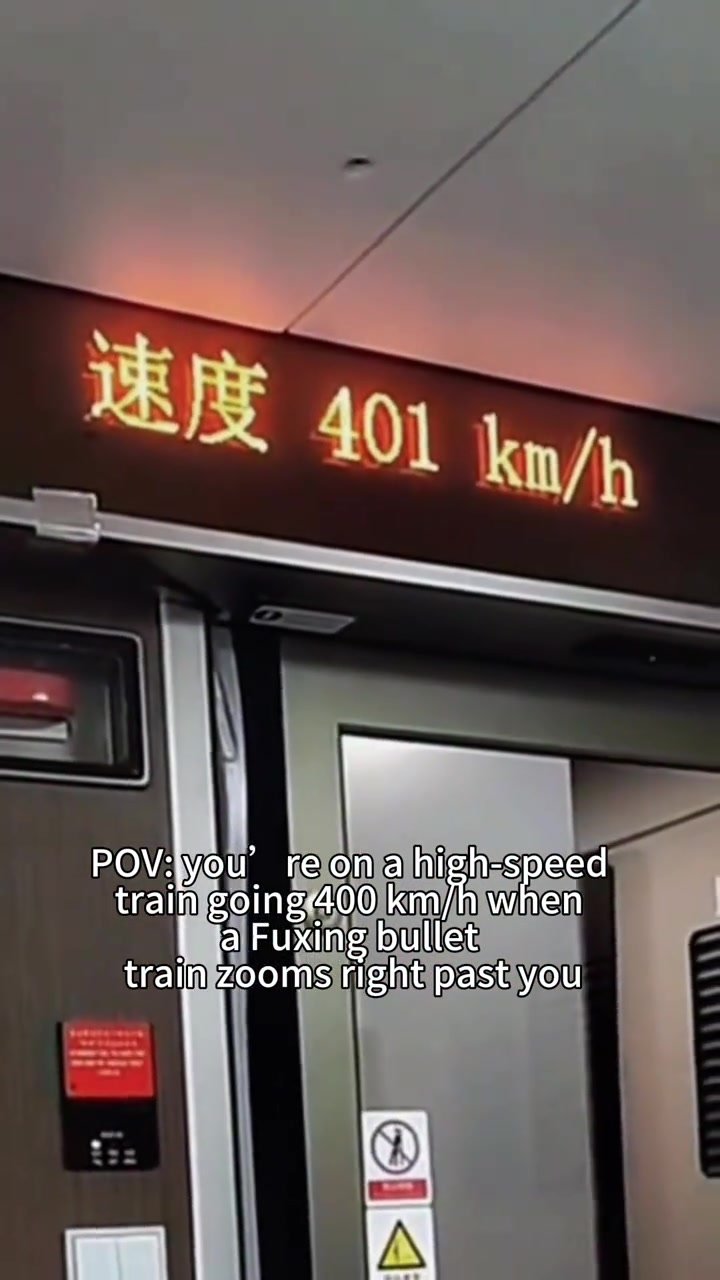
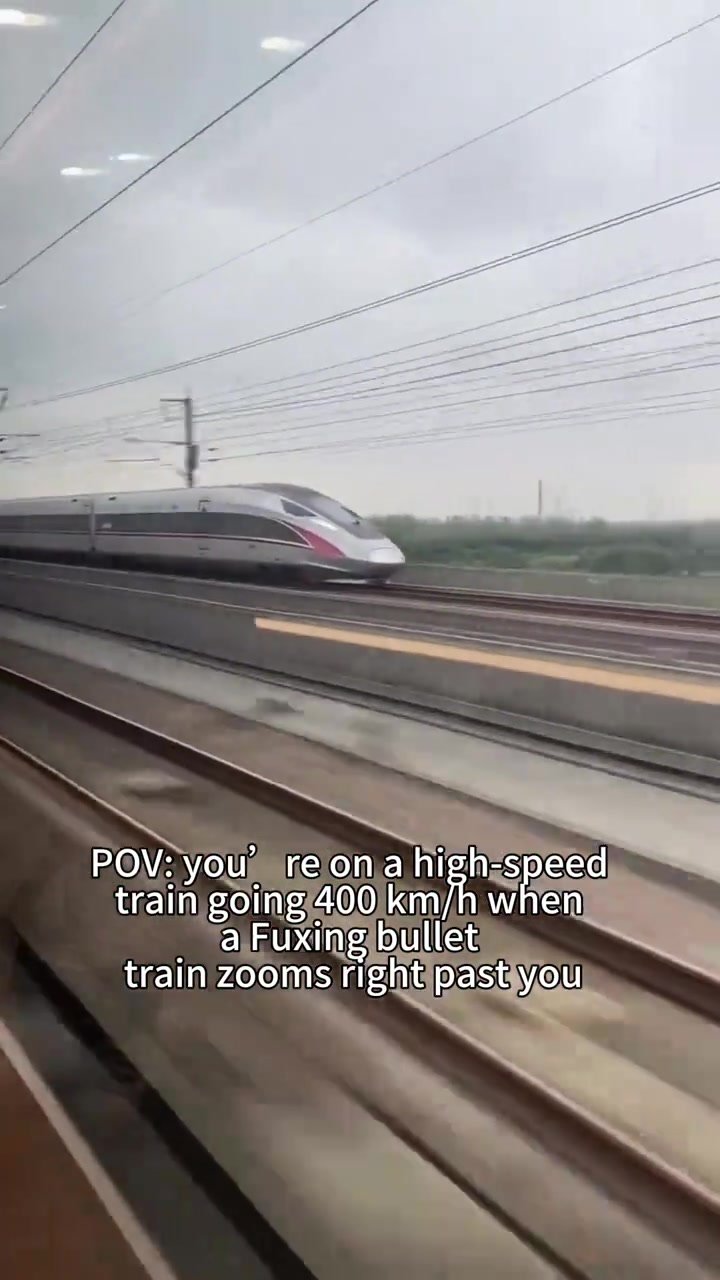
A short video shared by lin china tour on TikTok shows a passenger inside a train, a carriage display reading 401 km/h and a Fuxing train passing outside. Those are observations from the clip, not enough information to establish the route, operating conditions or precise speed of either train independently.
For ordinary trip planning, travellers should not expect every Fuxing service to run at 400 km/h. Official information says current CR400 Fuxing trains operate at up to 350 km/h on suitable lines. China has tested the newer CR450 prototype with a planned commercial operating speed of 400 km/h, but testing and future capability are different from a speed guaranteed on a ticket you can buy today.
That distinction does not make the everyday experience less remarkable. At the end of 2025, China had 50,400 km of operational high-speed railway, according to the national railway operator. The more useful wonder is not a single number on a screen; it is the ability to connect major cities and many regional destinations without building every itinerary around airports.
Why the train can be part of the holiday
The pleasure begins with geography. A rail itinerary lets landscapes change continuously rather than disappearing beneath the clouds. Dense skylines give way to farmland, rivers, bridges and mountain cuttings, while stations place you in a sequence of distinct cities instead of isolated airport terminals.
There is also a satisfying rhythm to the experience. You arrive, pass through security and ticket checks, find the correct waiting area, board when your train is called, and watch the country unfold. Large Chinese cities may have several stations—often with directional names such as North, South or Hongqiao—so the station printed in your booking matters as much as the city.
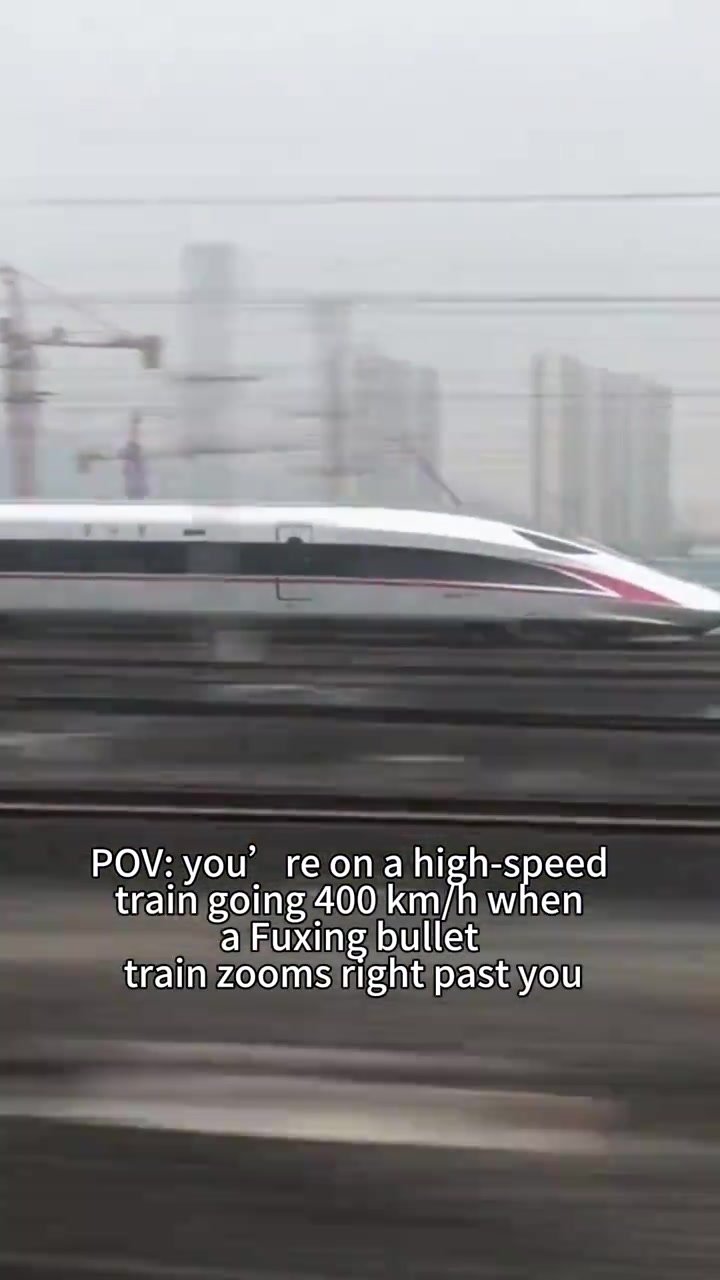
The passing train in the TikTok clip compresses that sense of movement into a few dramatic seconds. Seen from another fast-moving carriage, even a streamlined train appears almost unreal: first a silver shape on the horizon, then a blur, then empty track again.
For an international visitor, the best use of the network is rarely to chase a speed record. It is to replace an awkward domestic flight or long road transfer with a comfortable link between places that deserve time in their own right.
Build a journey, not a railway endurance test
A first rail-based trip works best with two or three bases rather than a frantic collection of station names. Beijing, Shanghai and Xi’an form an appealing introduction for history, contemporary city life and celebrated heritage, but they are only one possible combination. Other travellers might pair Shanghai with Hangzhou, continue through Fujian between Fuzhou and Xiamen, or use a major hub as the gateway to a smaller city.
Choose destinations first, then inspect the current timetable on the official China Railway 12306 platform. A line’s maximum design or operating speed does not tell you the duration of your particular journey. Stopping patterns, train category and route all matter. A slightly slower direct service may be more relaxing than a faster option requiring a transfer.
Leave breathing room, too. Two nights in each destination is a far better starting point than treating every city as a platform photo. High-speed rail makes distance easier, but it cannot make museums, neighbourhoods and meals meaningful if you never stop moving.
Booking as an international visitor
China Railway’s official booking channels are the 12306 English website and the Railway 12306 app. Foreign passport holders can create an account and complete real-name identity verification online. The official government guide says travellers may enter their passport details for automatic verification or upload an image of the passport information page for manual review. Verification is also available at a station ticket office.
Once verified, international travellers can buy tickets online and use supported foreign or Chinese bank cards or mobile-payment services. Station ticket offices are another official option and accept eligible identification and payment methods, including RMB cash under the published guidance.
Enter your name exactly as it appears in your passport and check the departure station carefully before paying. Keep the original passport used for the booking with you: it serves as the identity document connected to the e-ticket. At stations, passport users may pass through a compatible automatic gate or use a staffed manual inspection channel. If in doubt, show your booking and passport to railway staff.
Because availability and sales arrangements can change—especially around major public-holiday travel periods—check 12306 for the live timetable, fare, seat inventory and current rules rather than relying on an old screenshot or third-party blog.
What to expect at the station
Allow a sensible margin before departure. Chinese high-speed railway stations can be enormous, and reaching the building is not the same as reaching your gate. You may need time for security screening, identity checks, orientation and a walk across a large waiting hall. Boarding generally closes before the train leaves, so this is not the moment to test how quickly you can sprint with luggage.
Pack so you can move independently. Keep your passport, phone and booking details accessible rather than buried beneath clothes. Bring water or buy refreshments where permitted, but confirm current security restrictions locally. Noise-cancelling headphones can be useful, although watching the scenery is arguably the better entertainment.
On board, follow the carriage and seat numbers shown in your reservation. Different services and seat classes offer different layouts, so treat photographs online as examples rather than promises. Station dwell times may be brief; prepare before your stop and check that you have your passport, bags and charging cables.
A concise planning checklist
- Verify visa, entry and transit requirements for your own passport through official channels.
- Register and complete passport verification on 12306 before the day you intend to travel.
- Search using the exact departure and arrival stations, not only city names.
- Confirm the live train number, time, fare and seat class before purchase.
- Carry the original identity document used for booking.
- Arrive with enough time for security, navigation and ticket inspection.
- Use the staffed channel if your passport does not work at an automatic gate.
- Recheck official notices near major holidays, when demand and station crowds can be unusually high.
The real thrill is the freedom to keep going
A speed display makes a brilliant travel-day story, but China’s railway becomes most impressive when it stops feeling like a stunt. It can wake you in one city, carry you past landscapes you would otherwise never see, and deliver you to another place in time for an evening walk and dinner.
That is the fantasy echoed by travellers joking about unreliable trains back home: not merely moving faster, but imagining rail as something dependable enough to shape an entire adventure around. Plan conservatively, use official booking information and give each destination room to breathe. The result may feel futuristic, yet its greatest pleasure is wonderfully ordinary—you sit by the window, and the next city comes to you.
Accuracy note: The video frames document what appeared in one short recording. Train models, speeds, timetables, fares, station procedures and ticketing rules vary and may change. Confirm journey-specific details through China Railway’s official 12306 channels. This article is prepared as a WordPress draft and has not been published.
Sources and Traveler Note
- Original TikTok video by lin china tour
- China Railway 12306 English website
- Guide to Working and Living in China as Business Expatriates 2025
- China’s railway mileage tops 165,000 km
- Prototype of CR450 bullet train undergoes tests in Beijing
- Beijing-Guangzhou high-speed railway starts operation at 350 km/h
Details such as staffing, events, weather, admission rules, opening hours and transport can change. Verify current information with the destination before booking.