
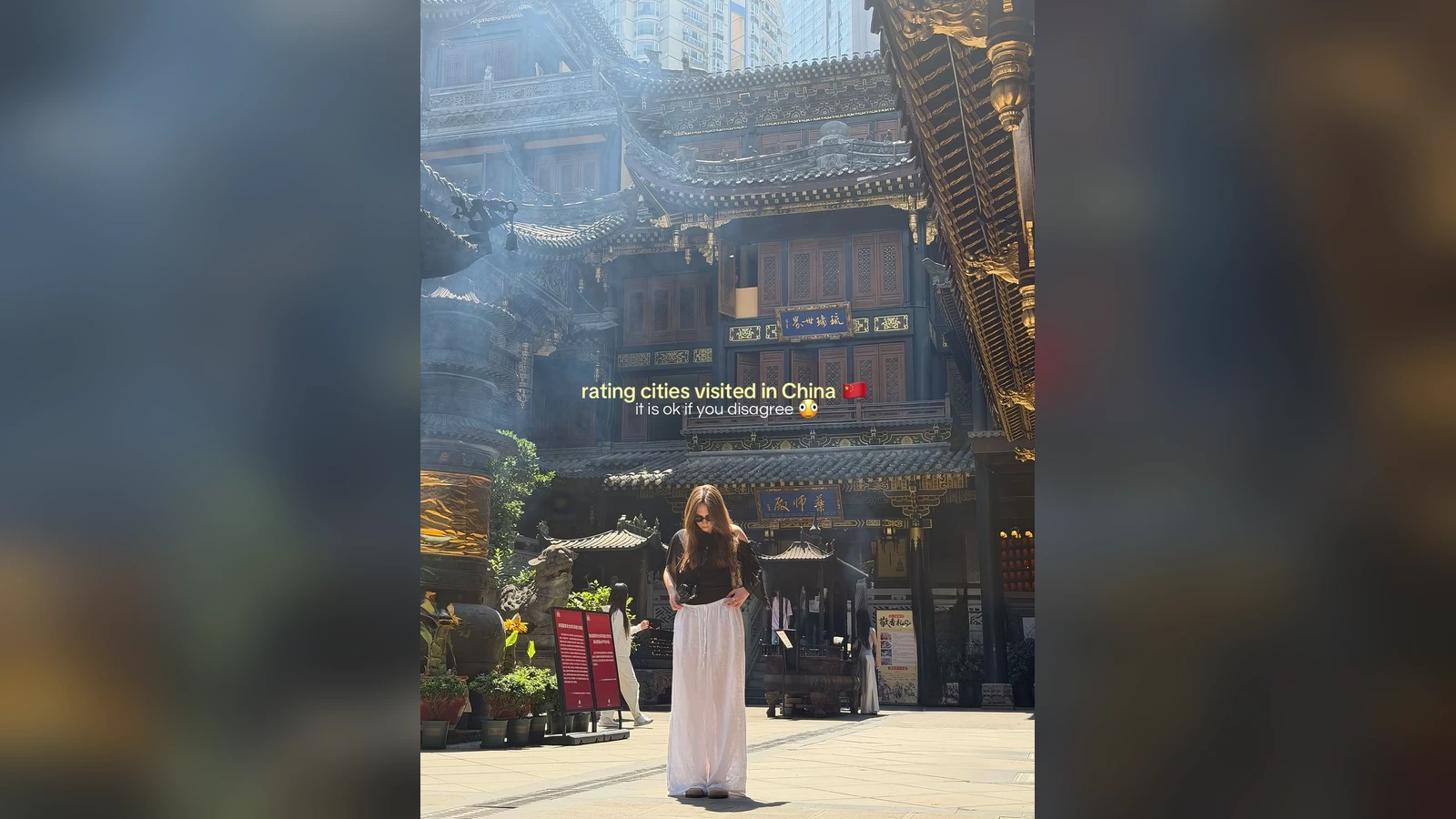
There is a deliciously difficult question hiding inside many first trips to China: should Beijing or Shanghai get top billing? In Sasha’s TikTok photo carousel, Beijing receives the triumphant 10/10 while Shanghai lands at 8/10. The comments repeatedly rally around Beijing—especially its history—yet the more useful takeaway is not that one city “wins.” It is that the order of your stops can completely change how each place feels.
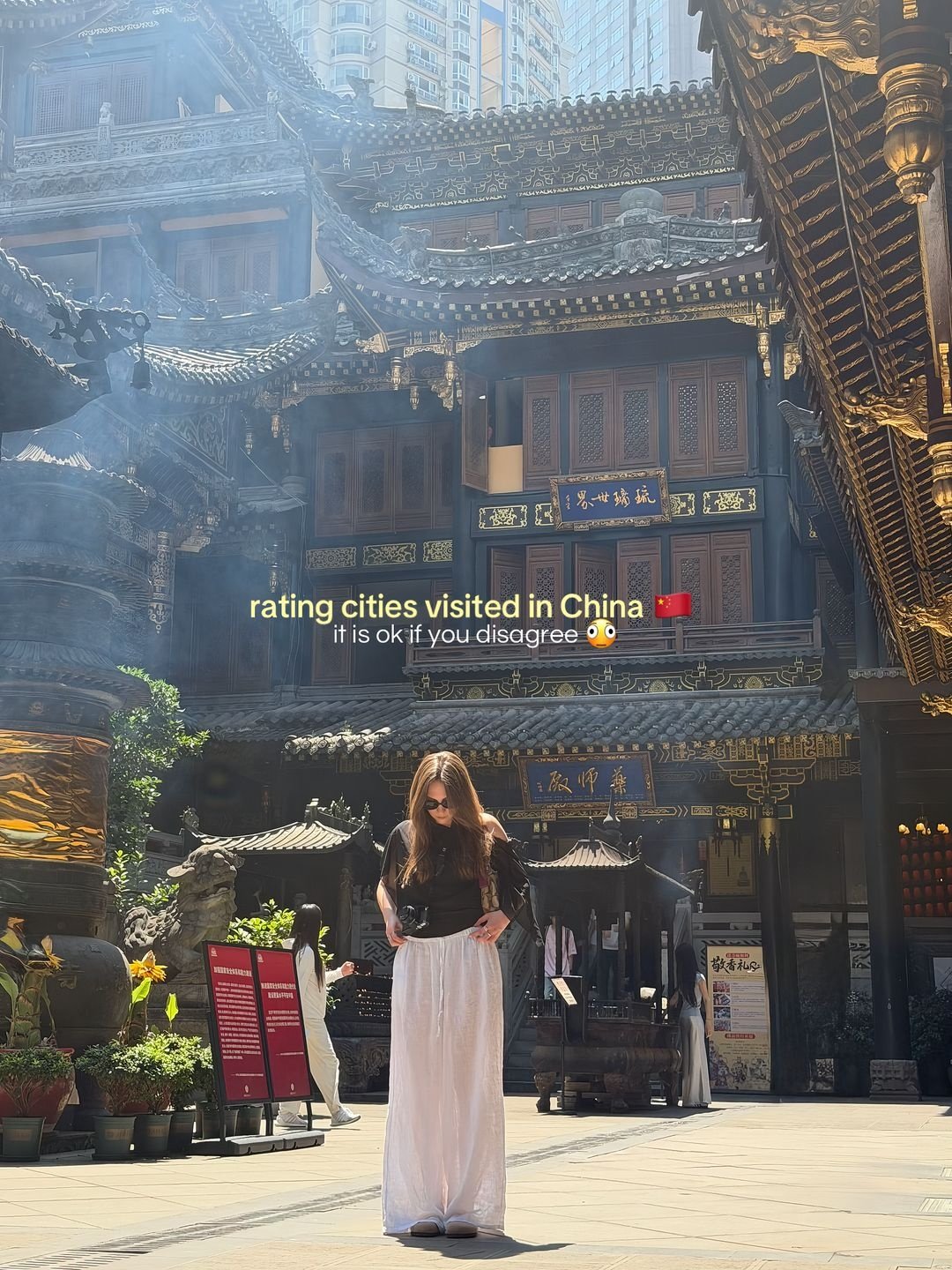
A strong first itinerary should build contrast rather than string together famous names. One compelling progression begins amid Chongqing’s vertical spectacle, slows down among the mountains and riverside towns of Hunan, reaches a historical climax in Beijing, and finishes beside Shanghai’s glittering waterfront. It is less a ranking than a journey through several radically different versions of urban China.
Begin with Chongqing’s beautiful sensory overload
Chongqing makes an audacious opening act. Hills, bridges, high-rises and layered roads create a city that can feel three-dimensional, particularly after dark. The carousel captures that sensation through a crowded night terrace overlooking illuminated towers. It looks cinematic, but the appeal is also wonderfully ordinary: people are eating, talking and occupying the view rather than merely posing in front of it.
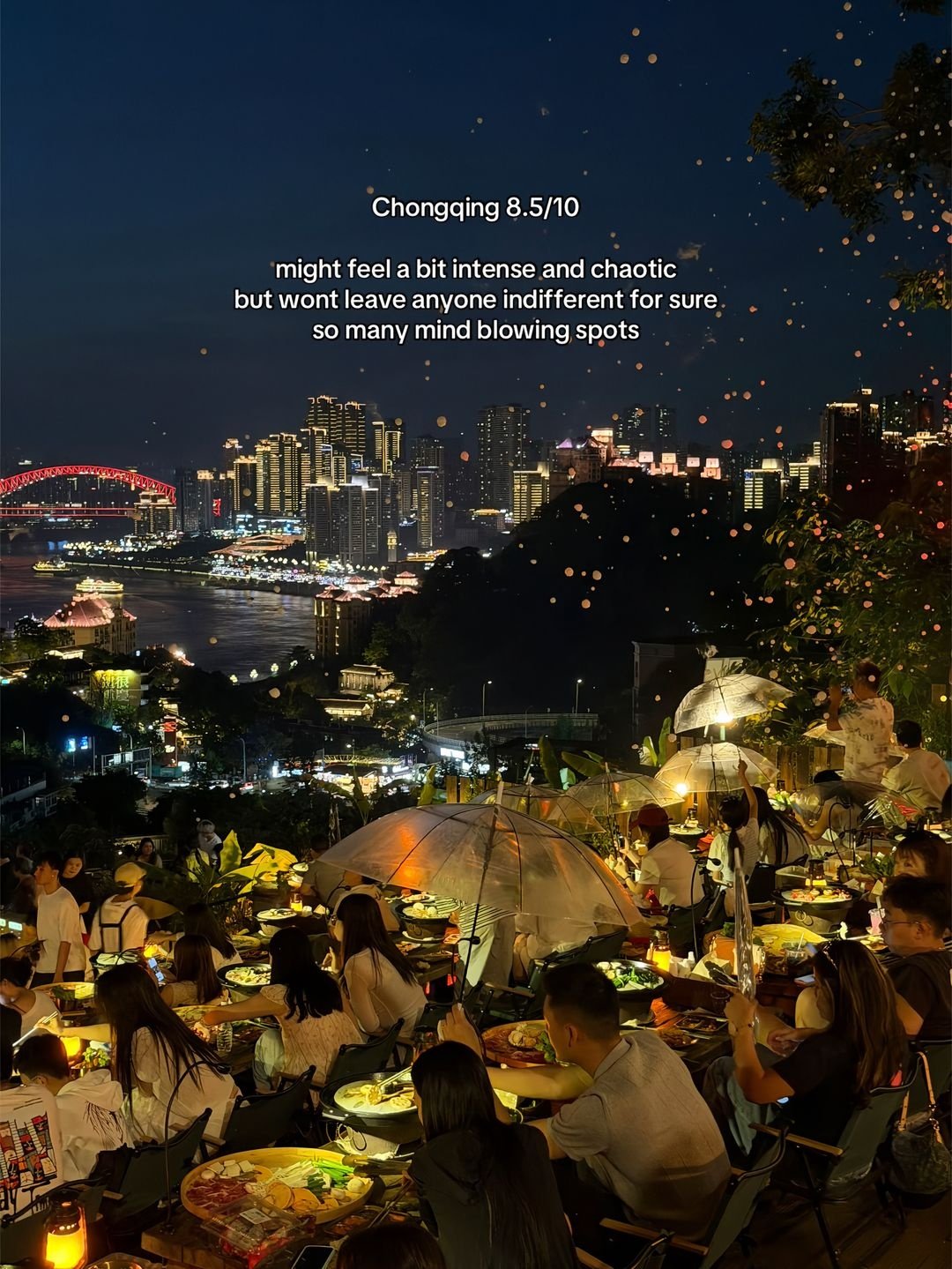
Give Chongqing enough time to find a rhythm beyond its most photographed viewpoints. Explore a hillside neighbourhood in daylight, stop for food, then return to the skyline after dark. Comfortable shoes matter here; so does accepting that maps cannot fully communicate the effort required by a steep street or an entrance on an unexpected level. The goal is not to conquer every landmark. It is to adjust to the scale, crowds and pace of a Chinese megacity.
Trade the skyline for Wulingyuan’s stone pillars
After Chongqing, Hunan provides the reset. The carousel shifts abruptly to water, mountains and the gateway area near Wulingyuan. That visual pause is exactly why the sequence works: the landscape feels more dramatic after the density of the city.
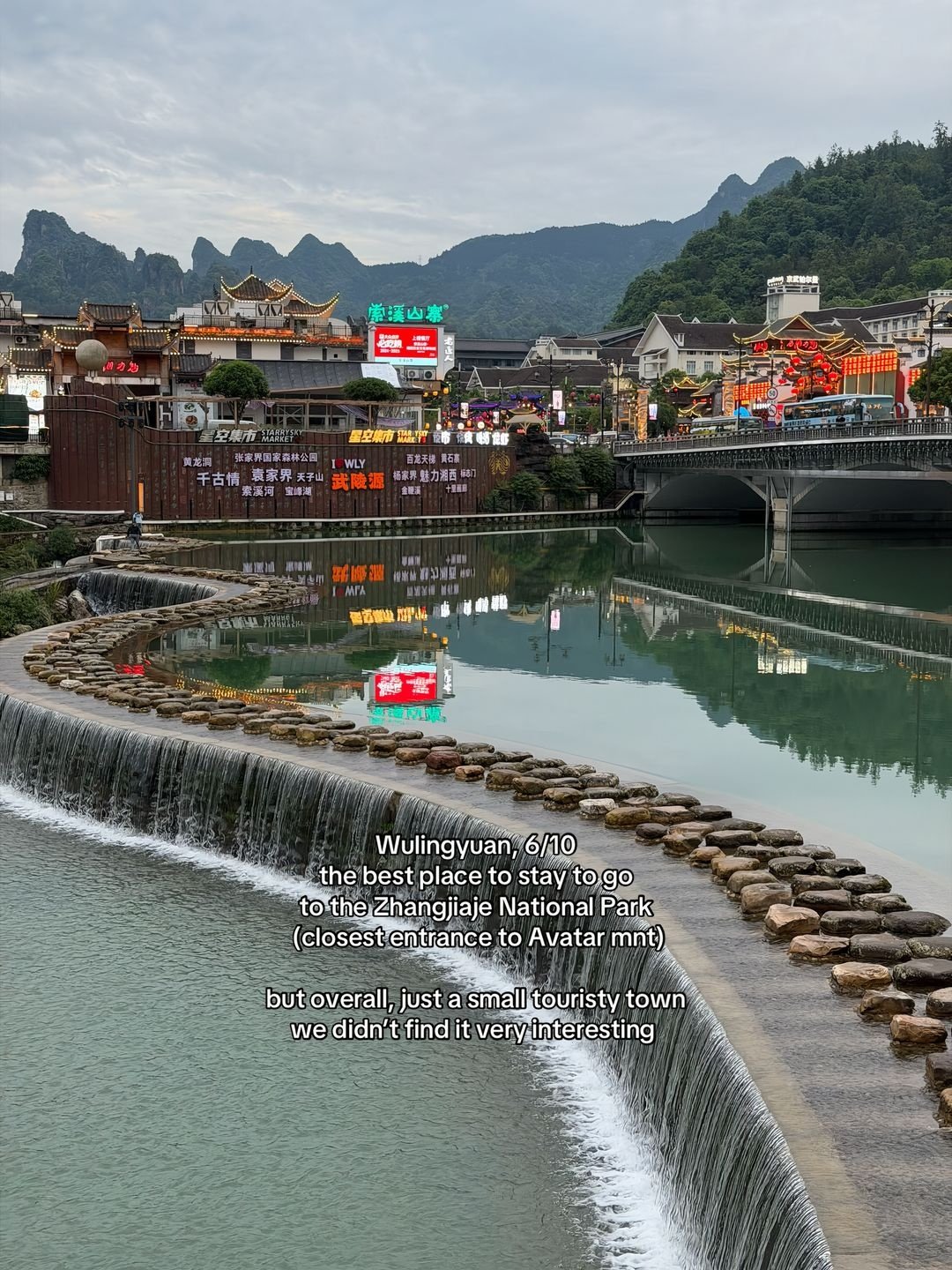
The independently verified reason to linger is substantial. The UNESCO-listed Wulingyuan Scenic and Historic Interest Area covers a landscape celebrated for thousands of narrow sandstone pillars and peaks, alongside ravines, streams and waterfalls. It is not one quick viewpoint. Choose a manageable area for each day, expect walking and elevation changes, and leave room for visibility to alter what you can see. Weather and access conditions vary, so check official local notices shortly before visiting.
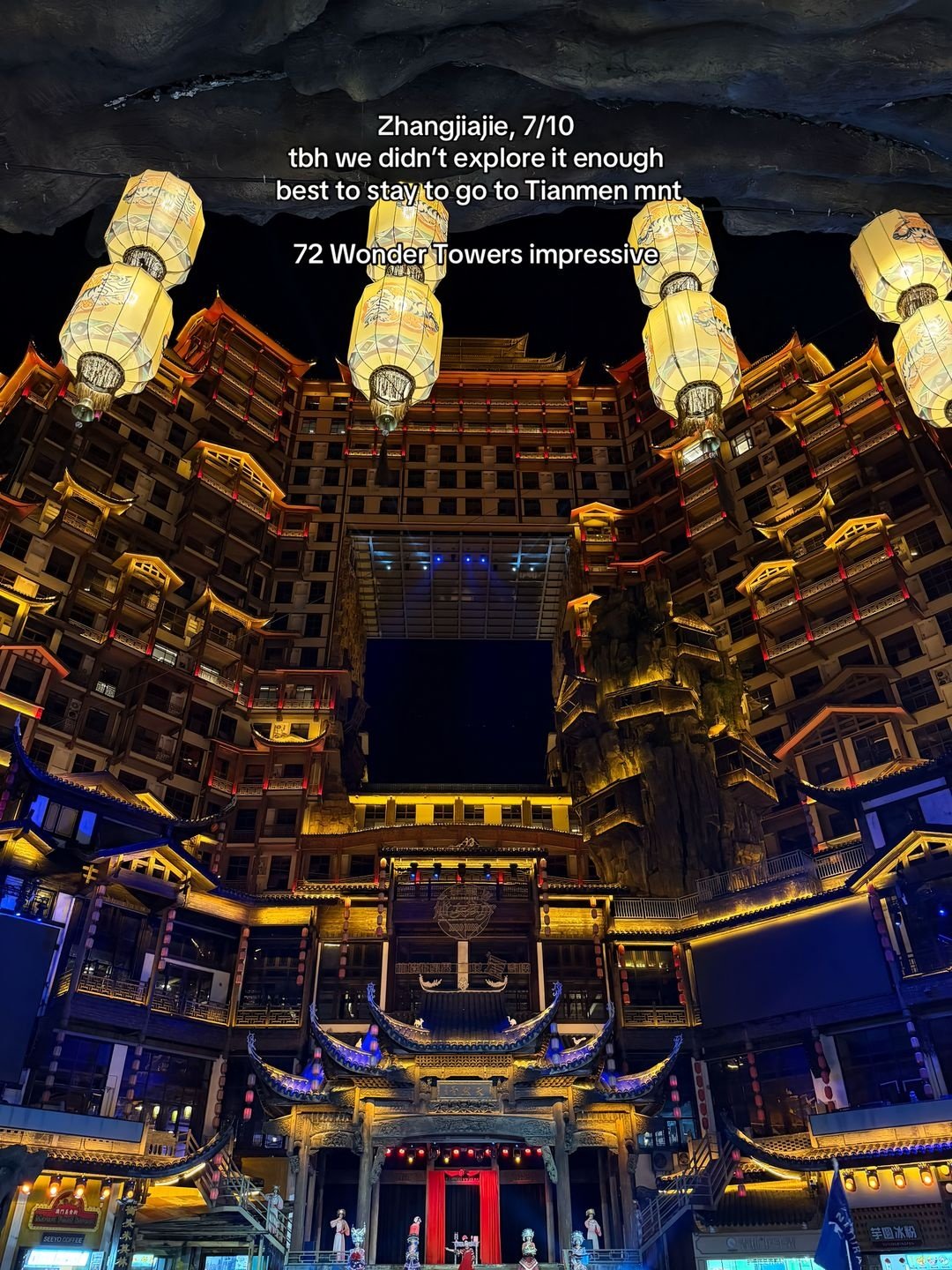
The carousel’s next image shows the theatrical architecture of Zhangjiajie’s 72 Qilou complex at night. Treat such contemporary attractions as an optional evening contrast, not a substitute for the protected natural landscape. The park is the reason to allow multiple days; illuminated architecture is the colourful extra.
Slow down in Fenghuang and Furong
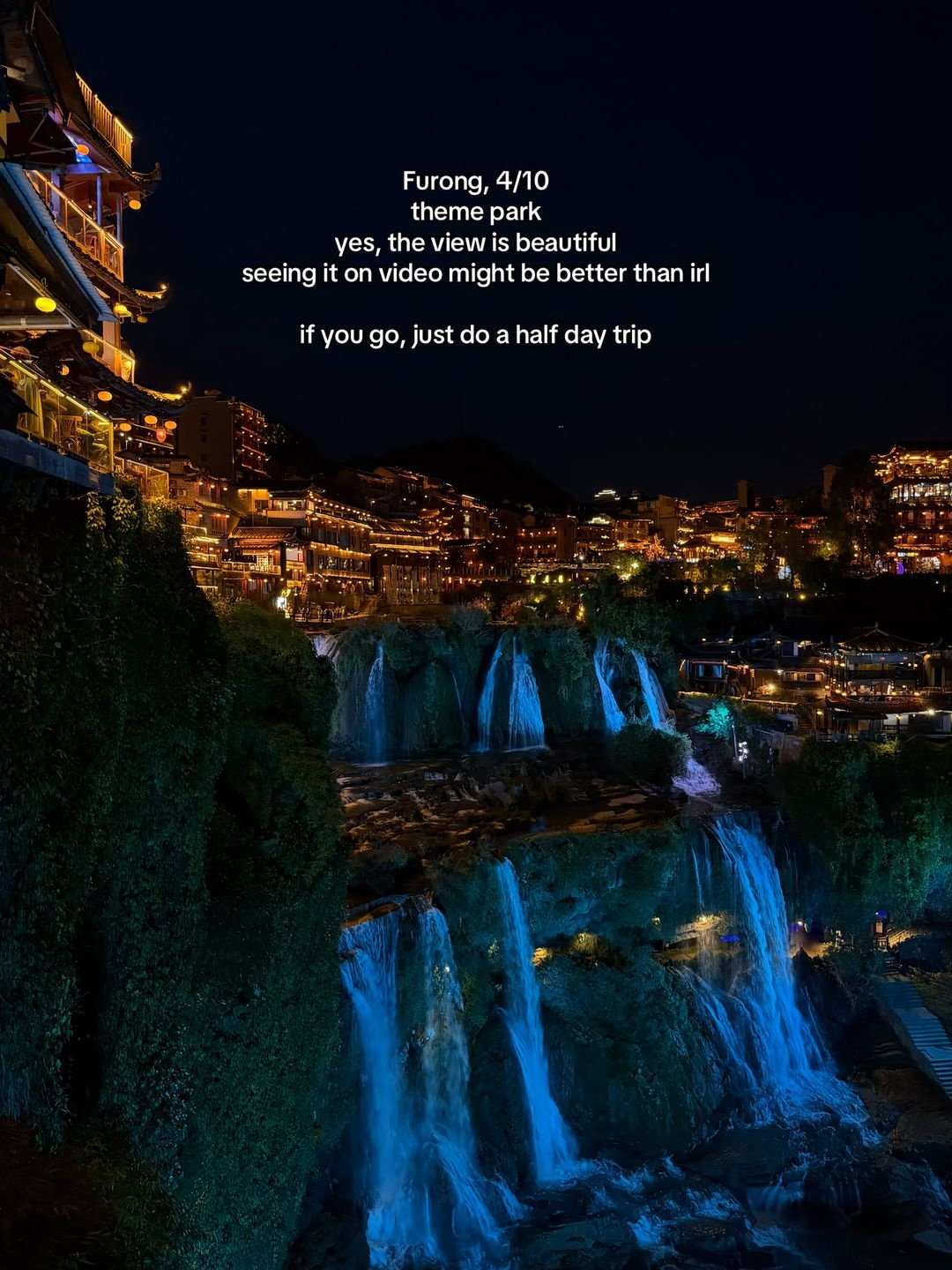
From the mountains, the route turns toward two photogenic waterside settlements. Fenghuang Ancient Town presents timber-fronted buildings along the Tuojiang River, while Furong Town is known for buildings rising above and around a waterfall. Their atmosphere changes between the active daytime and illuminated evening, but both deserve more than a frantic photo stop if your schedule allows.
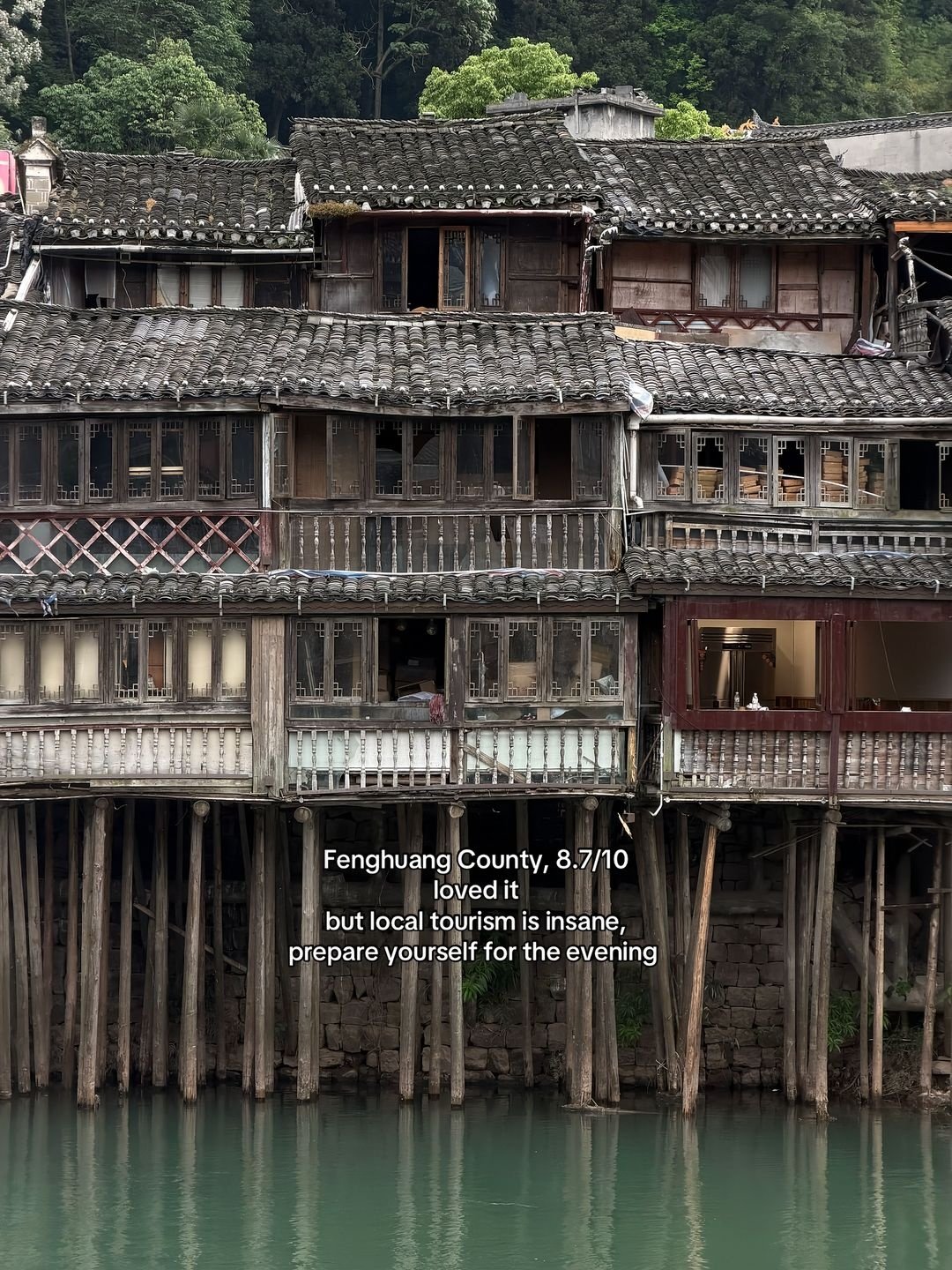
Fenghuang rewards wandering away from the most obvious riverbank compositions. Cross a bridge, look back at the rooflines and pay attention to the town as a lived place rather than a historical stage set. Crowds, commercial activity and lighting are part of the modern visitor experience, so anyone seeking quiet should build flexibility into the day instead of expecting an empty old town.
Furong can work as a shorter stay. The carousel itself suggests a half-day experience, although that is a personal judgement rather than a universal rule. Travellers who enjoy photography or slow evenings may want longer; those prioritising Wulingyuan can keep it compact. Do not force both towns into an already crowded itinerary merely because they look similar on a map.
Use Changsha as the lively hinge
Changsha brings the route back to full urban energy. The carousel shows rain, umbrellas and a huge “I love Changsha” sign—an appropriately bold image for a city often associated with an animated food and nightlife culture. Rather than treating Changsha only as a transport connection, give it space to be the social hinge between rural scenery and the formal grandeur of Beijing.
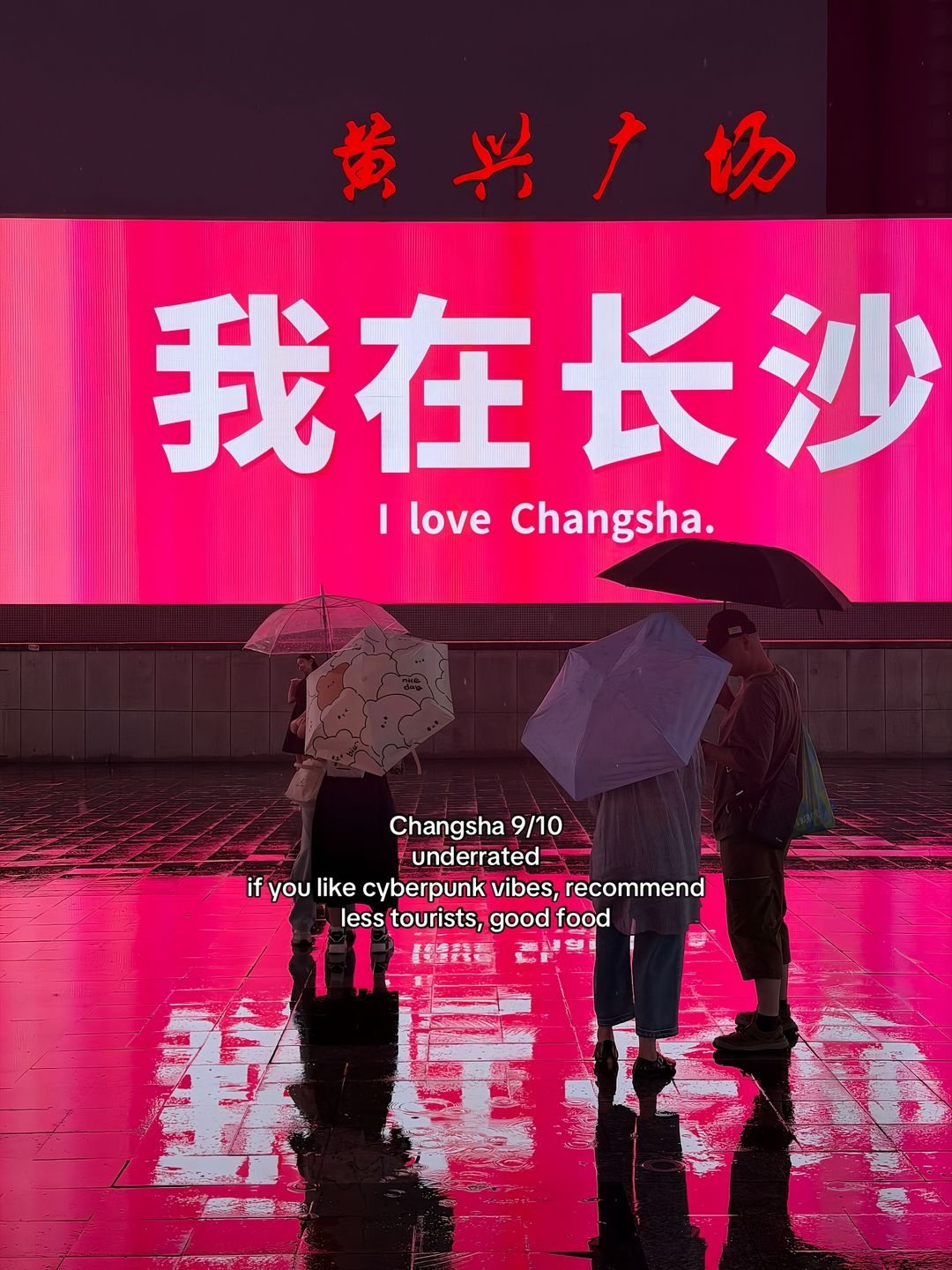
This is the moment for an unhurried food evening, a museum or a walk through a busy commercial district. It is also a useful recovery point: do laundry, reorganise luggage and resist adding another distant excursion. A successful multi-city trip needs pauses as much as highlights.
Save Beijing’s historical scale for the climax
The repeated enthusiasm for Beijing in the carousel’s comments is the clearest audience signal. Several travellers call it a 10/10 city; others specifically praise its historical atmosphere. That affection makes sense when Beijing is approached as a place to read slowly rather than a checklist to clear.
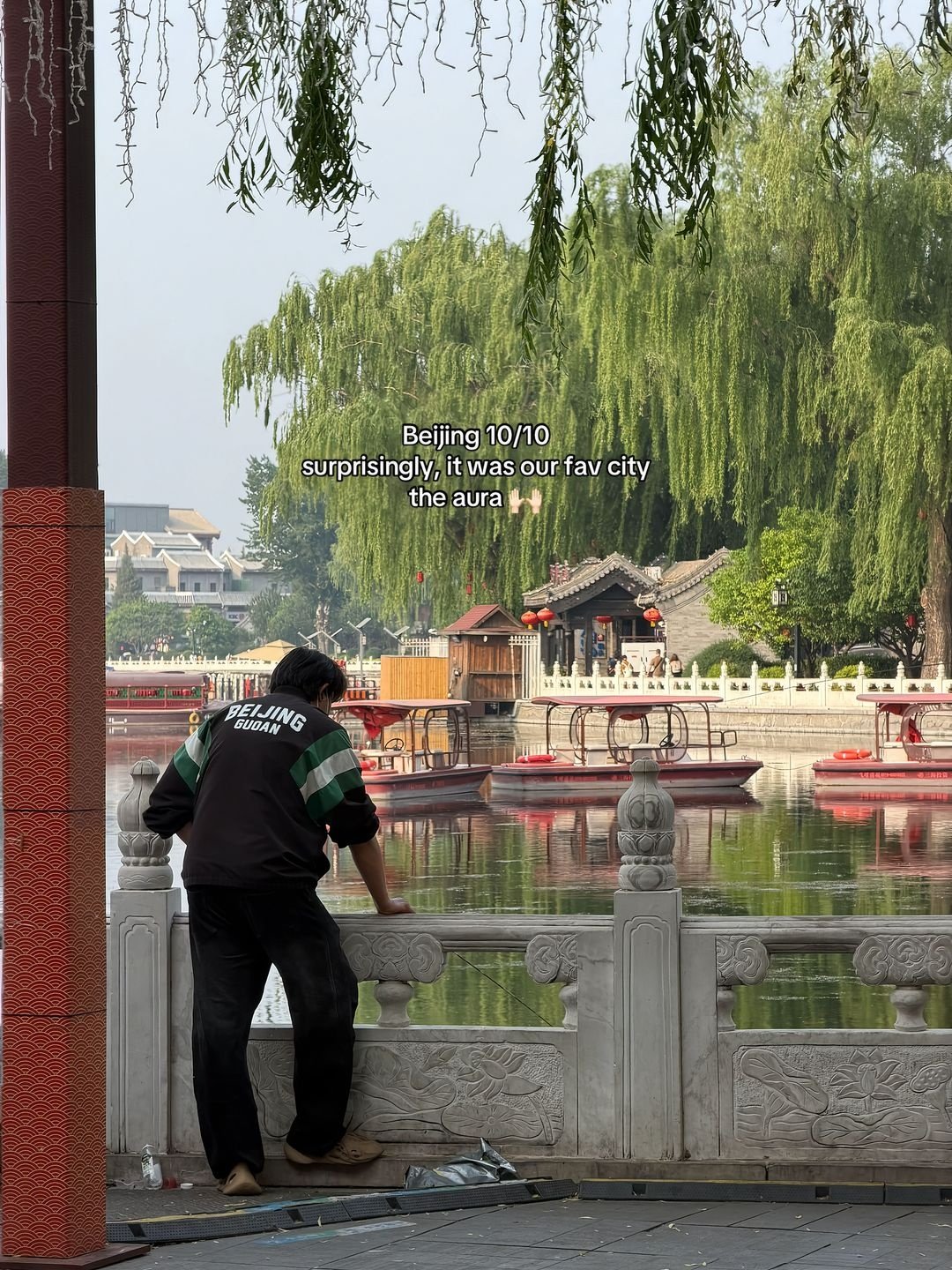
The city’s north–south Central Axis is a particularly useful organising idea. Inscribed by UNESCO in 2024, it links former imperial palaces and gardens, ceremonial structures and public buildings through historic Beijing. The official Beijing visitor guide describes a 7.8-kilometre sequence running from the Bell and Drum Towers through the Forbidden City and Tian’anmen Square to Yongdingmen.
Do not attempt the entire historical city in a single breath. Pair one major reserved attraction with a neighbourhood walk, park or meal. The Forbidden City alone represents centuries of imperial architecture and court history; UNESCO describes it as the seat of supreme power for more than five centuries. Check each attraction’s official reservation requirements before committing to a day plan.
Let Shanghai become the polished epilogue
Shanghai works beautifully after Beijing, even if you ultimately prefer the capital. The carousel’s night view frames the Oriental Pearl Tower and Pudong skyline across the Huangpu River—the futuristic counterpart to Beijing’s ceremonial axis.
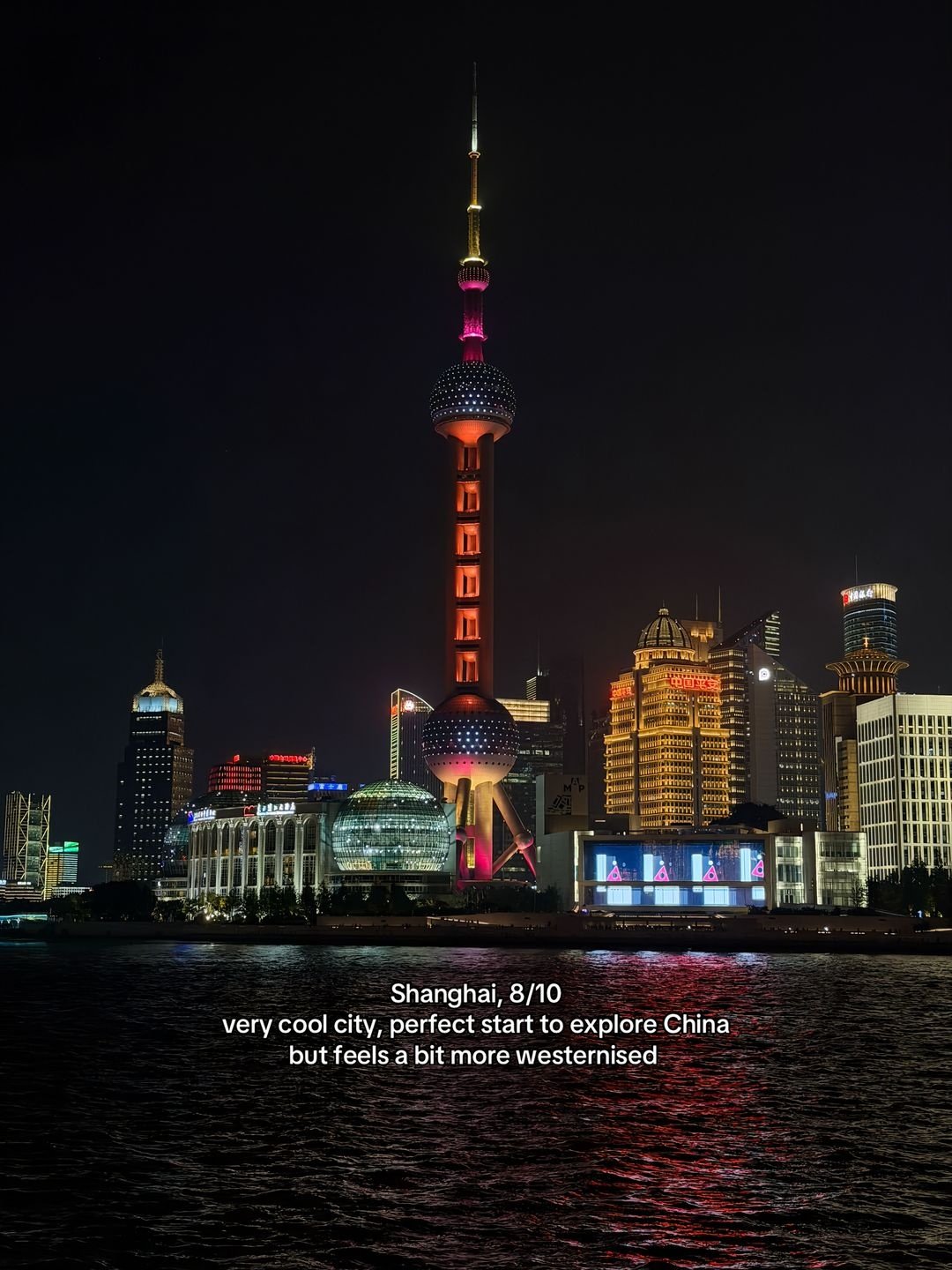
Walk both sides of the visual conversation. On the west bank, the Bund is a protected historical waterfront where Shanghai’s official guide identifies 52 Gothic and Baroque-style former financial and trading buildings. Across the river, Pudong supplies the famous contemporary skyline. Seeing the two together is more interesting than reducing Shanghai to “modern China.”
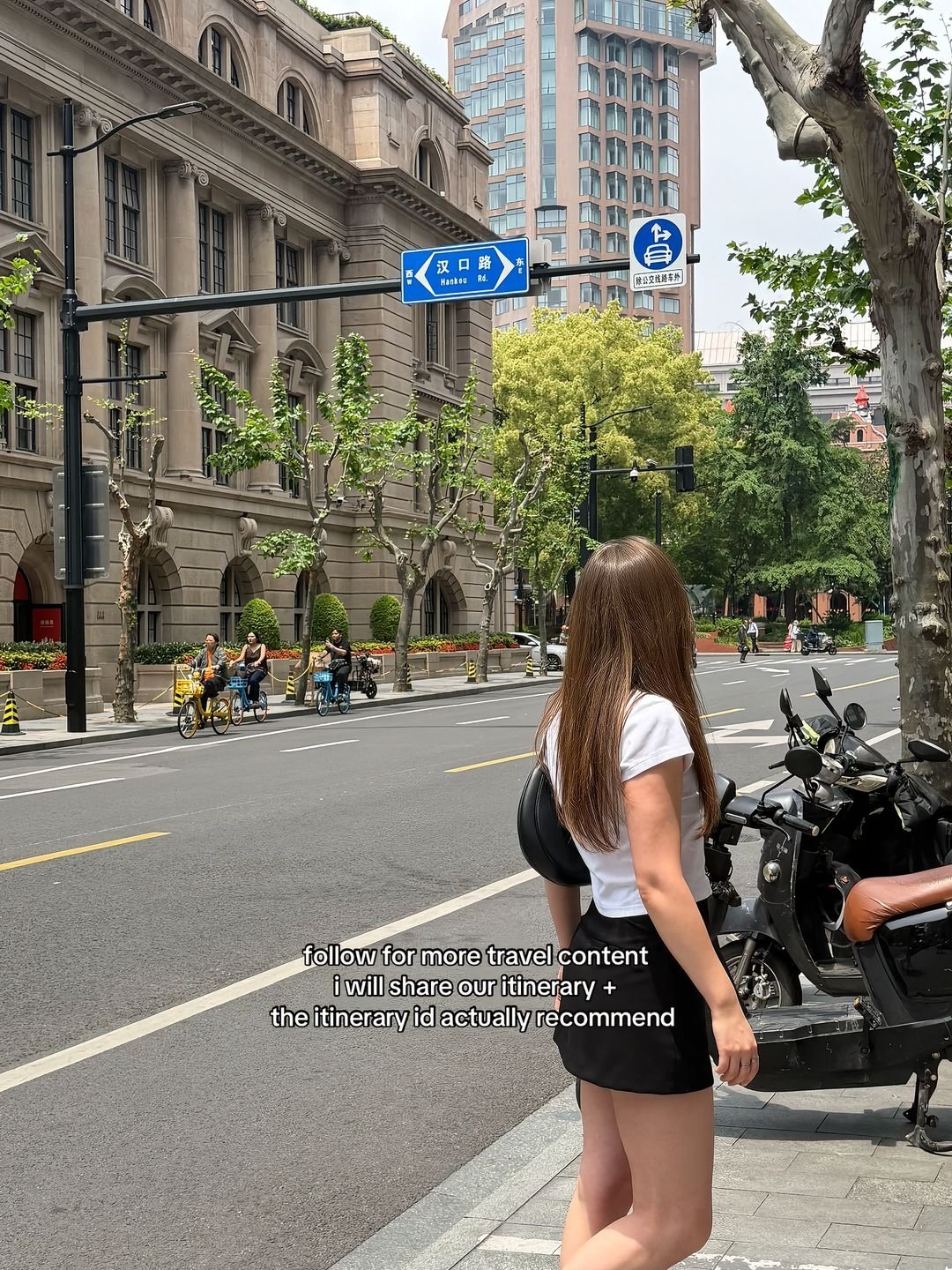
The final carousel image brings the scale back down to street level: a traveller, leafy trees, traffic and layered architecture. That is the right closing mood. After monuments and mountains, leave time to notice how a city actually moves.
Practical planning for this route
Allow roughly two weeks or more if you want meaningful time in all four regions; shorten the list rather than converting every stop into a transfer day. Confirm entry requirements for your nationality directly with an official Chinese embassy or consulate, since policies can change.
Foreign passport holders can complete identity verification and buy rail tickets through China Railway’s official 12306 English service. China’s current government guidance also says international cards can be linked to major mobile-payment apps, while cash and bank-card acceptance remain available in various settings. Set up at least two payment methods, keep your passport accessible on travel days and download key addresses in Chinese.
Most importantly, preserve the contrasts. Chongqing supplies the shock of scale; Wulingyuan, Fenghuang and Furong change the tempo; Changsha restores the buzz; Beijing provides historical weight; and Shanghai offers a polished waterfront finale. Beijing may still win your personal ranking—but the real pleasure lies in earning that opinion one dramatically different stop at a time.
Accuracy note: Destination access, reservations, transport availability and local conditions can change. Verify details with official operators shortly before travel. This article is an editorial draft based partly on Sasha’s carousel; its ratings and impressions remain the creator’s own.
Sources and Traveler Note
- Original TikTok photo carousel by Sasha (@saashroom)
- Wulingyuan Scenic and Historic Interest Area — UNESCO
- Beijing Central Axis — UNESCO World Heritage Centre
- Imperial Palaces of the Ming and Qing Dynasties — UNESCO
- World Cultural Heritage Tour in Beijing: Central Axis
- The Bund — Shanghai Municipal Government
- Guide to Working and Living in China (2025 Edition)
Details such as staffing, events, weather, admission rules, opening hours and transport can change. Verify current information with the destination before booking.